Tronlink wallet is a self-custody TRON wallet built around TRX resources and TRC-721 NFTs
Tronlink wallet is a self-custody wallet for the TRON network that stores private keys locally, signs transactions, and gives users direct access to TRX, TRC-10 tokens, TRC-20 assets, TRC-721 NFTs, staking, voting, and resource delegation. Its distinctive value is the way it exposes TRON-specific mechanics: Energy and Bandwidth are not abstract background details, but account resources that affect transfers, smart-contract calls, and delegated activity.
TRX resources are part of the wallet experience
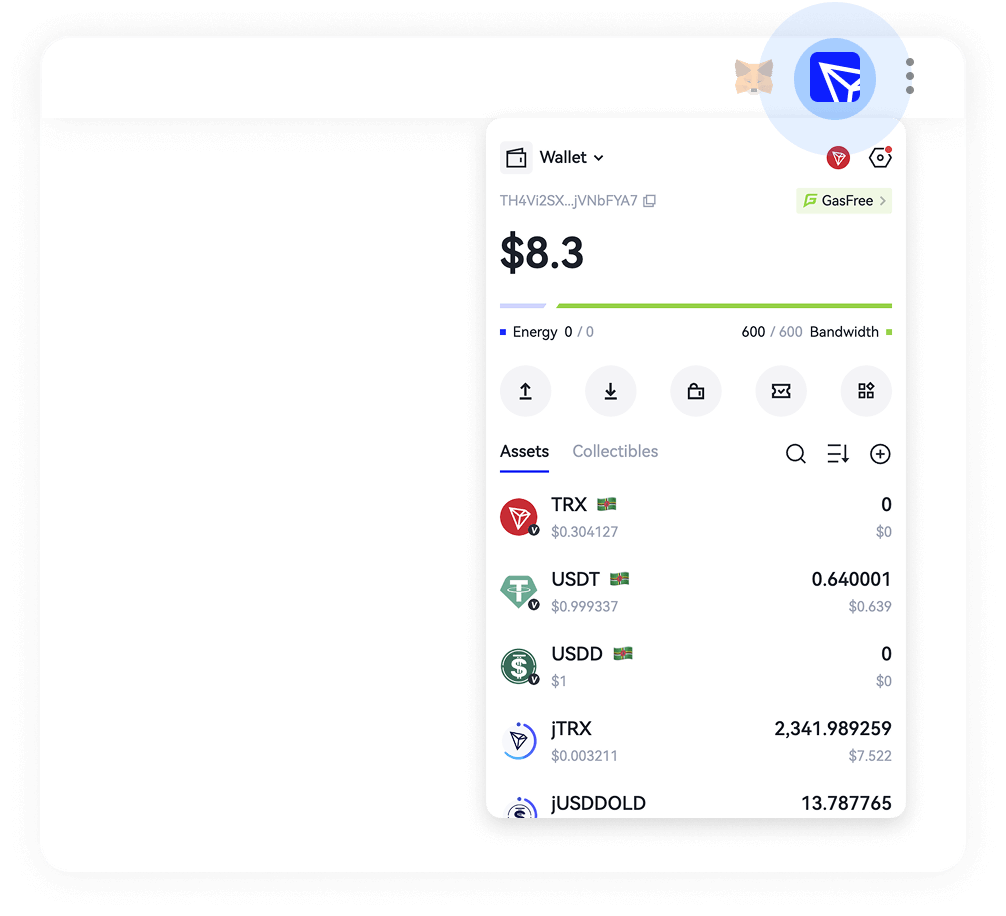
On TRON, every transaction consumes network resources. Simple transfers use Bandwidth, while smart-contract interactions such as TRC-20 transfers and DApp calls use Energy as well. TRX staking produces those resources, and the wallet interface places that relationship close to everyday account management. A user who holds TRX sees more than a spendable coin balance; the account also has resource capacity that determines how smoothly it handles on-chain actions.
This matters most when using USDT on TRON, NFT marketplaces, DeFi apps, games, or multisignature accounts. An account without enough Energy pays more in TRX for contract execution. An account with delegated resources completes the same operation with less friction because the network already has the required capacity assigned to that address.
How delegation changes a TRON account
Resource delegation lets one TRON account assign Energy or Bandwidth to another account while ownership of the staked TRX stays with the delegating account. Tronlink wallet presents this as an account-management action rather than a separate developer process. The delegator chooses the target address, resource type, and amount; the receiving account then uses those resources for eligible transactions.
Delegation is useful when a main account funds another address, a team operates a shared wallet, or a user keeps assets separated between a daily hot wallet and a colder storage setup. It also helps when a DApp account needs predictable contract execution while the staked TRX remains under a different address. The transaction still settles on TRON, so addresses, permissions, and signing prompts deserve close attention before approval.
TRC-721 NFTs sit beside tokens, not in a separate world
TRC-721 is TRON's non-fungible token standard. It handles unique token IDs rather than interchangeable balances, which makes it suited to collectibles, game items, digital art, memberships, and other one-of-one assets. Tronlink wallet supports TRC-721 assets alongside TRX, TRC-10, and TRC-20 holdings, so the same account view serves both fungible tokens and NFTs.
The important difference is how transfers behave. A TRC-721 movement sends a specific token ID from one address to another, and the connected contract defines metadata, ownership rules, and display details. The wallet signs the transaction and displays the asset, but the NFT's contract determines what the token represents. That separation keeps wallet custody and token logic distinct.

Using the extension with TRON DApps
The browser extension is the common route for desktop DApp sessions. A website requests a wallet connection, the extension exposes the active account to the page, and every sensitive action returns to the wallet for review and signature. This flow covers swaps, lending interfaces, NFT transfers, staking dashboards, and smart-contract calls that rely on TronWeb integration.
Tronlink wallet also supports EVM networks in the extension, including Ethereum, BSC, and BTTC, while keeping deep TRON support as its core identity. That multichain coverage is practical for users who move between TRON-native assets and EVM applications, yet the signing screen remains the critical checkpoint. The address, network, contract, token amount, and permission request are the facts that decide what the signature authorizes.
Mobile accounts, HD wallets, and Ledger import
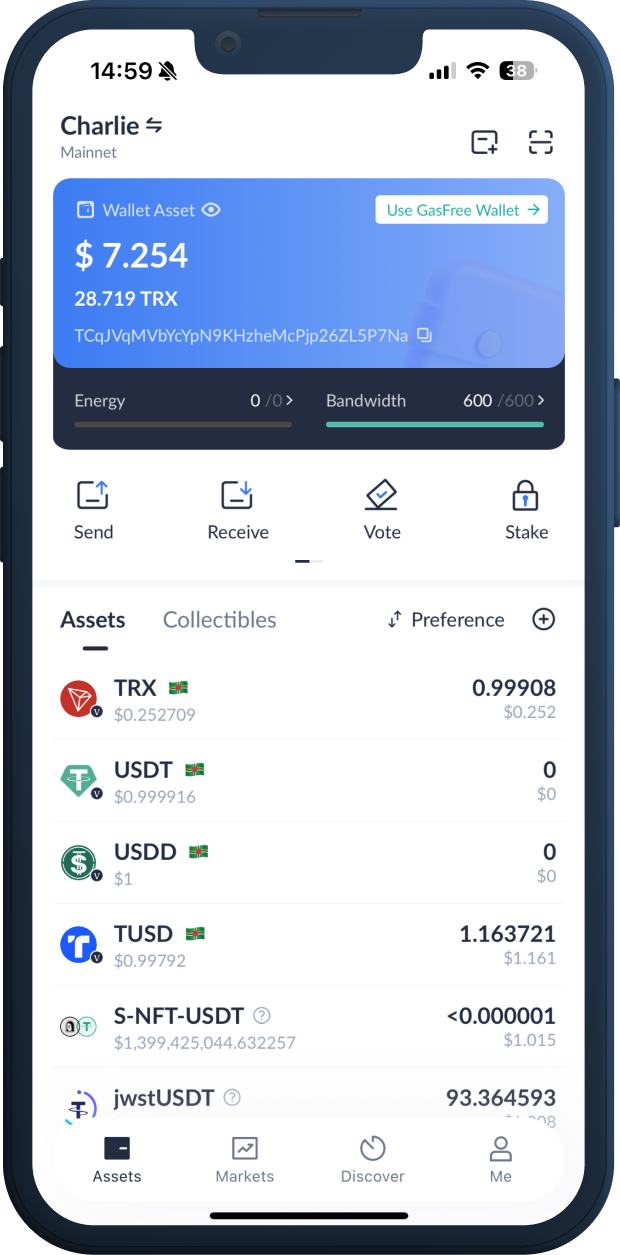
The mobile app supports wallet creation, wallet import, and multiple accounts under an HD wallet structure. A single mnemonic generates addresses, while account separation keeps different uses organized: one address for daily transfers, another for NFTs, another for DApp testing, and another for long-term holdings. Tronlink wallet also supports importing Ledger wallets over Bluetooth, which brings hardware-wallet signing into mobile workflows.
That structure gives users a practical custody ladder. A hot account signs quickly from a phone or browser. A Ledger-backed account keeps the private key inside hardware while the app helps prepare transactions. A multisignature account adds permission rules across multiple signers for shared treasury, business, or family asset management. Each model has a different operating rhythm, and the wallet surfaces those differences through account type and signing flow.
What to check before sending TRX, USDT, or NFTs
Transfers on TRON are fast enough that mistakes become final quickly. The sending screen deserves a deliberate read, especially when the asset is USDT as a TRC-20 token or an NFT using TRC-721. The visible token name is less important than the contract, network, recipient address, and resource requirement.
- Confirm the account is on TRON before sending TRC-10, TRC-20, or TRC-721 assets.
- Match the recipient address exactly, especially when copying from an exchange or DApp.
- Review Energy and Bandwidth usage before signing contract interactions.
- Keep the mnemonic offline and never enter it into support chats, forms, or unknown pages.
- Use a small test transfer when dealing with a new counterparty or unfamiliar contract.
These checks are especially important because seed-phrase scams and fake recovery offers target wallet users across every chain. A legitimate wallet session asks for signatures, not private recovery words during routine support or DApp use.
Voting and staking make TRX more than a gas asset
TRON staking ties TRX to resources and governance. Staked TRX produces account resources and voting power for Super Representative voting. In Tronlink wallet, this turns staking into a recurring account decision: how much TRX to keep liquid, how much to commit for Energy or Bandwidth, and where to direct votes.
The governance side matters because voting participates in the network's block-production system. The resource side matters because it changes the cost profile of daily activity. Someone who sends occasional TRX needs little setup. Someone who moves TRC-20 tokens, interacts with contracts, or operates an NFT account benefits from understanding how resource balances refill and how delegated capacity supports active addresses.
Where multisignature fits into asset management
Multisignature support gives one asset set multiple approving accounts. Instead of relying on a single private key for every movement, the account uses a permission structure that requires more than one signature for selected actions. This suits shared operating funds, higher-value collections, and workflows where one person prepares a transaction while another approves it.
That said, Tronlink wallet exposes multisignature as a wallet feature rather than a purely command-line task. The benefit is operational clarity: a transaction carries a visible approval path, and no single signer silently moves shared assets if the permission design requires additional signatures. It still demands discipline, because losing access to required signer accounts creates a recovery problem for the group.
Alternatives for different custody habits
Several wallets overlap with parts of this workflow, but the tradeoffs are different. A hardware wallet such as Ledger focuses on isolating private keys and pairs well with a software interface for transaction preparation. Trust Wallet covers many chains in a mobile-first design and includes TRON assets, though it is less centered on TRON resource delegation. MetaMask dominates EVM DApps and works naturally with Ethereum-style networks, but TRON-native account resources are not its home territory.
For users whose main activity is TRX, TRC-20 USDT, TRC-721 NFTs, voting, resource delegation, and TRON DApps, Tronlink wallet keeps those mechanics in the foreground. For users whose activity lives mostly on Ethereum, Solana, or Bitcoin, a different primary wallet fits better. The right choice follows the chain where assets and contracts actually live.
A practical path for a new TRON user
Start by creating or importing an account, then record the mnemonic offline before adding funds. Receive a small amount of TRX first, because TRX pays network costs and supports staking. After that, add the assets you expect to use: TRC-20 tokens such as USDT, TRC-721 NFTs, or DApp positions.
Once the account has history, the resource screen becomes more important than the token list alone. Track Bandwidth, Energy, staked TRX, delegated resources, and pending signatures. Tronlink wallet is strongest when treated as a TRON control panel: it stores assets, signs transactions, opens DApps, displays NFTs, and lets the user shape how account resources are consumed across the network.
Common questions about Tronlink wallet
Fees on Tronlink wallet for TRC-20 transfers: what creates the cost?
TRC-20 transfers use TRON smart contracts, so they consume Energy as well as basic network capacity. If the account lacks enough Energy, the transaction burns TRX to cover execution. Staking TRX for Energy or receiving delegated Energy lowers the amount of TRX spent on contract calls. A simple TRX transfer has a different resource profile from a USDT TRC-20 transfer.
Can I delegate TRX resources to an account without sending it my TRX?
Yes. Resource delegation assigns Energy or Bandwidth to another TRON address while the staked TRX remains controlled by the delegating account. The receiving address uses the delegated resource for eligible transactions, but it does not own the underlying TRX. This is useful for funding operational accounts, DApp addresses, or separate wallets that need transaction capacity.
Which NFT standard should I expect in a TRON collection?
TRON NFTs commonly use TRC-721, the network's non-fungible token standard for unique token IDs. A collection contract defines metadata and ownership logic, while the wallet displays and transfers the token tied to a specific address. Fungible assets use different standards, such as TRC-10 or TRC-20, so the asset type matters before sending or importing a token.
Recovering access to a Ledger-imported TRON account: what matters most?
A Ledger-imported account depends on the hardware wallet's recovery phrase, not the software app's mnemonic. The app prepares the transaction interface, while the Ledger device signs with keys stored in hardware. If the device is lost, the Ledger recovery phrase restores access on a compatible device. The software wallet password alone does not recover that hardware-backed account.
Is BTTC support the same as holding TRON mainnet assets?
No. BTTC is an EVM-compatible network, while TRON mainnet uses TRON accounts and token standards such as TRC-10, TRC-20, and TRC-721. The extension supports BTTC as part of broader network coverage, but assets remain tied to the network where they were issued. Sending tokens across networks requires the correct address format, network selection, and bridge flow.