Tronlink wallet is a self-custody TRON wallet for TRX resources, tokens, and DApps
Tronlink wallet is a self-custody wallet built around the TRON network, where users hold their own private keys while sending TRX, managing TRC-10 and TRC-20 tokens, collecting TRC-721 NFTs, staking for Energy and Bandwidth, voting for Super Representatives, and opening TRON DApps from a browser extension or mobile app. Its practical difference is resource-aware wallet management: it treats staking, delegation, transaction costs, and DApp signing as everyday wallet actions.
TRON resource management is the main wallet workflow
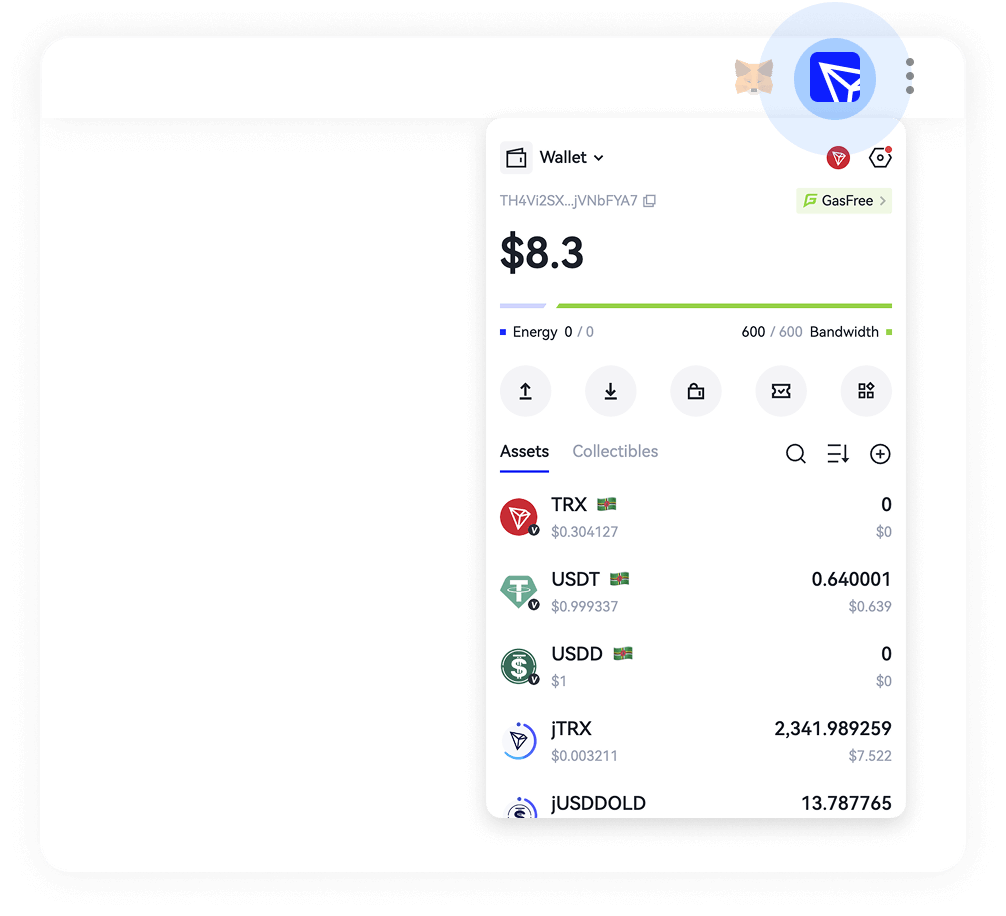
On TRON, wallet activity is tied closely to resources. Bandwidth covers basic transaction data, while Energy pays for smart contract execution such as TRC-20 token transfers and DeFi interactions. When an account has enough resources, many actions settle without burning extra TRX for network fees. When resources are short, TRX pays the cost directly. Tronlink wallet brings that resource model into the user interface instead of leaving it buried behind raw chain data.
This matters most for people who move USDT on TRON, interact with smart contracts, or manage frequent payments. The wallet shows balances and transaction prompts while also connecting those actions to the account that signs them. Staking TRX, receiving delegated resources, and choosing how to spend or conserve Energy become part of normal account maintenance rather than a separate technical chore.
How staking TRX connects to Energy, Bandwidth, and voting
Staking on TRON locks TRX to obtain network resources and voting power. Users choose resource targets, then apply the resulting capacity to their own account or delegate it to another address. The same stake also supports voting for Super Representatives, the block-producing participants in TRON's delegated proof-of-stake system. Tronlink wallet makes these actions visible beside the account balance, so staking is presented as wallet infrastructure rather than only a yield screen.
Resource delegation is useful when one account holds TRX while another account performs transactions. A team, merchant, or active DApp user can keep operational addresses funded with Energy without sending them a large liquid TRX balance. That separation reduces messy treasury handling and gives the resource owner a clearer view of what has been assigned.
Tokens, NFTs, and account structure inside the wallet
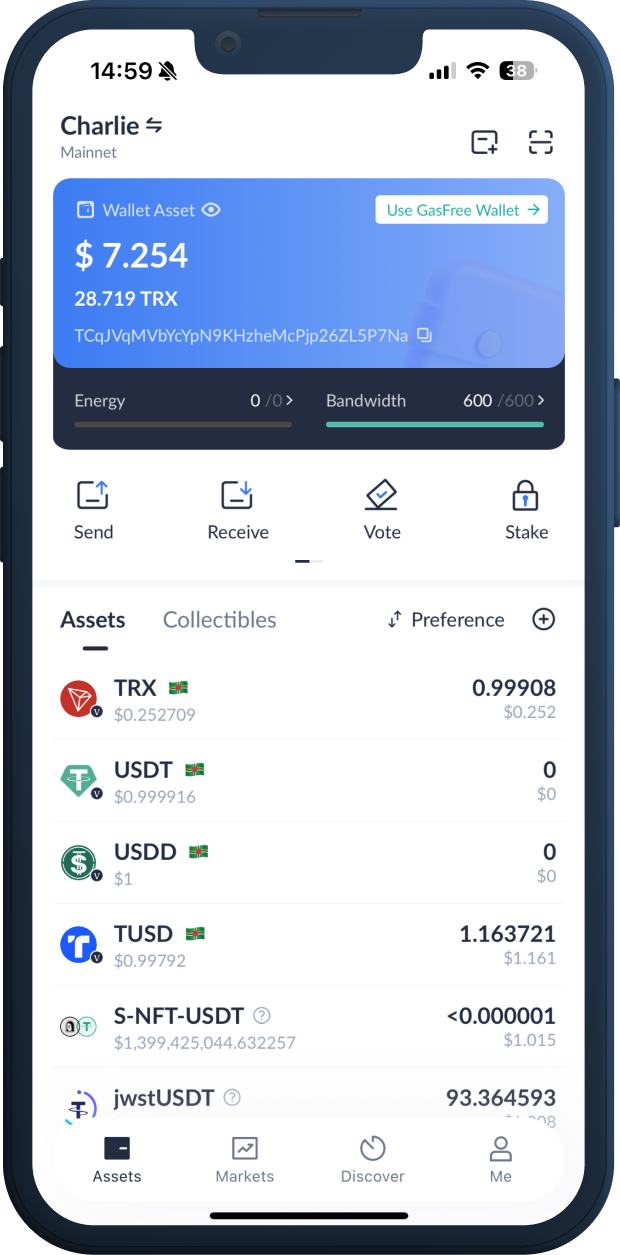
The wallet supports core TRON asset standards: TRX as the native coin, TRC-10 tokens issued directly on the chain, TRC-20 smart contract tokens, and TRC-721 NFTs. USDT on TRON is the asset many users recognize first, but the same wallet structure also handles governance tokens, game assets, collectibles, and contract-based balances displayed under the selected account.
HD wallet support lets one mnemonic generate multiple accounts, while import options cover existing private keys and compatible hardware wallet setups. Tronlink wallet also supports multiple wallet accounts, which helps separate personal balances, DApp testing, long-term holdings, and operational payment addresses. The important habit is to label accounts clearly before signing transactions, because TRON addresses look similar at a glance and DApp prompts act on the currently connected address.

Extension and mobile app roles are different
The browser extension fits desktop DApp use. It injects wallet connectivity into supported sites, opens signature prompts, switches accounts, and lets the user approve transactions while working in a normal browser session. The mobile app works better for scanning, everyday transfers, account checks, and on-the-go DApp browsing. Both formats support TRON, while the extension also covers EVM networks including Ethereum, BNB Smart Chain, and BTTC.
That multichain coverage uses a single wallet structure for several networks, but the transaction rules remain chain-specific. TRON fees depend on TRX and resources; Ethereum and BNB Smart Chain use their own gas models. Tronlink wallet keeps the network selector central because the same address view is not enough to explain which chain is signing, which asset is moving, or which gas token pays.
What a DApp signature actually approves
A DApp connection gives a site permission to see the selected address and request signatures. A transaction approval then authorizes a specific on-chain action, such as transferring a token, swapping through a smart contract, staking TRX, voting, or granting a token allowance. The wallet prompt is the last user-facing checkpoint before the account signs with its private key.
Reading that prompt matters because TRON DApps range from simple payment pages to complex DeFi contracts. Approvals for TRC-20 spending deserve special attention: an allowance lets a contract move tokens up to the approved limit. A small transfer prompt and a broad spending approval are different actions, even when they appear during the same DApp session. Tronlink wallet gives the signing screen; the user decides whether the displayed contract action matches the intended task.
Security model: local keys, encryption, and hardware separation
Self-custody means the private key or mnemonic controls the account. The wallet stores key material locally and protects it with encryption, while the recovery phrase remains the route back into the account if the device is lost. A password unlocks the local wallet; it does not replace the recovery phrase. Losing the phrase means losing the independent recovery path for that address.
Hardware wallet support adds physical signing for users who want stronger separation between browsing and key approval. Ledger import support gives a way to view and use accounts while keeping the private key on the device. Hot and cold wallet workflows also separate daily spending from long-term storage: the active account handles transfers and DApps, while the cold account signs less frequently and stays away from routine site connections.
Common wallet tasks that fit the TRON network
Most users come to Tronlink wallet for a concrete job rather than for wallet theory. The product is shaped around fast TRON account operations, especially token transfers and DApp signing. A normal setup flow covers account creation or import, recovery phrase backup, network selection, and the first small transaction to confirm the address works as expected.
- Send and receive TRX or TRC tokens from a TRON address.
- Stake TRX to obtain Bandwidth, Energy, and voting power.
- Delegate resources to another account that needs transaction capacity.
- Open TRON DApps and sign contract interactions from the chosen address.
- Manage TRC-721 NFTs and token balances across multiple accounts.
Those tasks share one pattern: every meaningful action ends with a signature request. The visible wallet account, selected network, contract address, token amount, and resource impact all deserve a quick check before confirmation.
Where alternatives fit around TRON and multichain use
Users who live mainly on TRON pick a wallet with strong TRX, TRC token, staking, and resource features. MetaMask remains the familiar choice for Ethereum and EVM chains, but it does not provide the same native TRON staking and resource workflow. Trust Wallet supports many assets in a mobile-first format, while Ledger Live centers on hardware-backed storage for supported coins. Tronlink wallet is the more specialized option when TRON DApps, USDT transfers on TRON, and resource delegation are regular tasks.
The best wallet setup is often a split workflow. A browser extension handles DApp signing, a mobile wallet covers quick transfers, and a hardware device protects the account holding larger balances. The same user can keep TronLink for TRON-specific activity while using another wallet for networks where that other tool has deeper support.
Getting started with a TRX account and fewer surprises
Start by installing the official extension or mobile app, then create a new wallet or import an existing one. Write the recovery phrase offline before funding the address. Add TRX first because it is the native asset used for staking, transfers, voting, and fallback transaction costs. After that, add TRC-20 tokens, connect to DApps only from the intended account, and keep a small amount of liquid TRX available even when most funds are staked for resources.
Once the wallet is funded, send a small test transfer to confirm the address and network. Then use the resource screen to decide whether the account needs Bandwidth for normal transfers, Energy for contract-heavy activity, or delegated capacity from another address. Tronlink wallet becomes easier to use when the account is organized around real activity: one address for frequent DApp signing, one for savings, and separate labels for any operational addresses.
Tronlink wallet - common questions
Does this TRON wallet charge its own fee for sending USDT?
The wallet itself is not the main cost driver for a USDT transfer on TRON. Network cost comes from the TRON transaction model, where Energy and Bandwidth cover execution and data. If the sending account lacks enough resources, TRX is burned to pay the transaction cost. A DApp or service connected through the wallet might add its own fee, but that is separate from the wallet signing the transaction.
Can I use one recovery phrase for TRON, Ethereum, BSC, and BTTC accounts?
Yes, the wallet supports a multichain HD structure that derives accounts from a single mnemonic for TRON and supported EVM networks such as Ethereum, BNB Smart Chain, and BTTC. The same recovery phrase is highly sensitive because it controls the derived accounts. Network selection still matters: assets and gas rules remain separate even when the wallet shows them under one account structure.
Recovering access if the phone with the mobile wallet is lost
Access is recovered by installing the wallet again and importing the recovery phrase or private key tied to the account. The app password on the lost phone does not restore the wallet by itself. If the recovery phrase was also lost, the address cannot be independently restored. Anyone who has the phrase can control the assets, so storage should be offline and private.
Which TRON token standards appear in this wallet interface?
The wallet supports TRX, TRC-10 tokens, TRC-20 tokens, and TRC-721 NFTs. TRC-20 covers smart contract tokens such as USDT on TRON, while TRC-721 covers non-fungible tokens. Display depends on the selected account and network. If a token does not appear automatically, adding it by contract details is the common next step.